How to Choose the Right CNC Press Brake in 2026?
Blog 2026-09-01 222
What is a CNC press brake?
CNC press brakes are the core equipment in sheet metal forming. They use a CNC system to precisely control the downward position and pressure of the ram (upper die), working in conjunction with the upper and lower dies to bend sheet metal to the required angle and shape.
Today, we’ll analyse how to select the right model of CNC press brake.
How a CNC press brake works
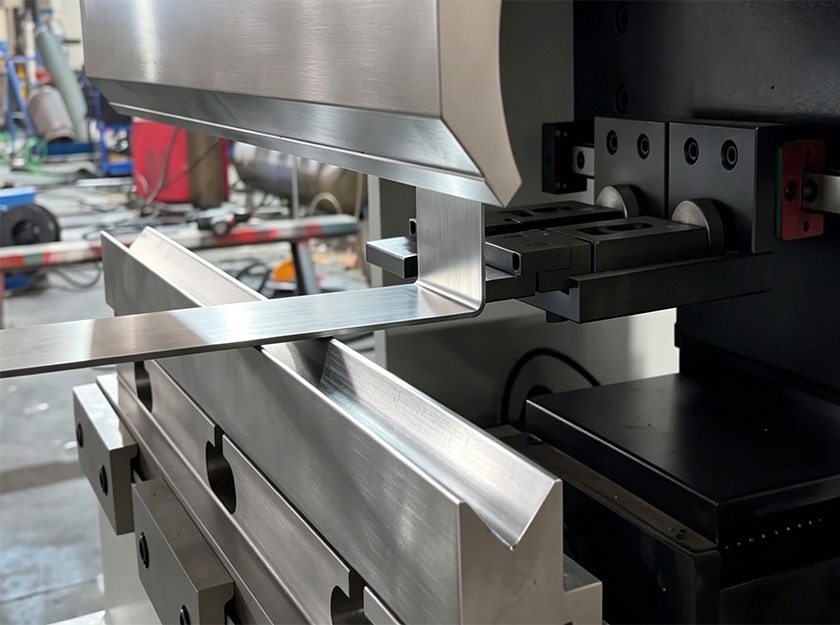
A press brake utilises the principle of plastic deformation of metal; by pressing down with the upper die, the sheet metal is forced into the V-shaped groove of the lower die, causing the material to bend.
Bending Workflow
Positioning
The sheet metal is placed on the lower die, and the backgauge system positions the bend line according to the set dimensions.
Bending
The ram drives the upper die downwards, pressing the sheet metal into the V-groove of the lower die to induce plastic deformation.
Hold
The ram remains at the bottom of the stroke for a period to minimise springback.
Return
The ram moves upwards to its home position, and the workpiece is removed.
Key Technical Points
Calculation of Bending Force
P(kN) = 1.42 × σb(MPa) × Sheet thickness²(mm²) × Bend length(mm) ÷ (1000 × V-groove widthmm)
The width of the V-groove is generally set at 6 to 8 times the plate thickness (8T is recommended); the higher the tensile strength of the material and the thicker the plate, the greater the tonnage required.
Springback Compensation
Springback occurs after a sheet is bent; the CNC system automatically compensates for the downward pressure based on the material, sheet thickness and angle.
Multi-axis Coordinated Control
The Y-axis (slider up/down), X-axis (rear stop forward/backward), R-axis (rear stop up/down) and Z1/Z2-axes (rear stop left/right) work in coordination.
Structural Components of a CNC Press Brake
The main mechanical components of a CNC press brake consist of a welded frame, an upper ram with a linear encoder and a lower worktable with deflection compensation, various bending dies, and a multi-axis servo-driven rear stop and front support,, combined with a hydraulic power system comprising a main cylinder, servo proportional valve, pump unit and synchronous balancing assembly, and supplemented by a CNC control system, servo motors, linear encoder displacement sensors, pressure transducers and the machine’s safety electrical circuitry, these components work together to achieve precise sheet metal bending, dimensional positioning and CNC control of the pressure stroke.
| Components | Functional Description |
| Frame | A fully welded structure, age-hardened to ensure the rigidity and dimensional stability of the entire machine |
| Slider (upper worktable) | Holds the upper die and performs the downward bending action; guided by rails. |
| Workbench (lower workbench) | Holds the lower die and absorbs the bending reaction force |
| Hydraulic system | main cylinder, hydraulic power unit, proportional/servo valves, etc., which provide the power for bending (electro-hydraulic servo models use a servo motor and pump) |
| CNC systems | which control the movement, pressure and angles of the various axes |
| Rear stop system | X/R/Z1/Z2 multi-axis positioning ensures dimensional accuracy during bending |
| Mould System | Upper mould (punch), lower mould (V-shaped die); specialised moulds can be configured according to the workpiece |
| Electrical System | Servo motors, encoders, linear encoders, PLCs and other sensing and drive components |
| Safety Protection | Laser/light curtain safety devices, anti-pinch devices, safety guards |
| Auxiliary Equipment | Mechanical/hydraulic compensation workbenches, material support frames, front feed tables, robotic loading and unloading systems |
Classification of CNC Press Brake
Torsion-axis synchronous CNC press brake
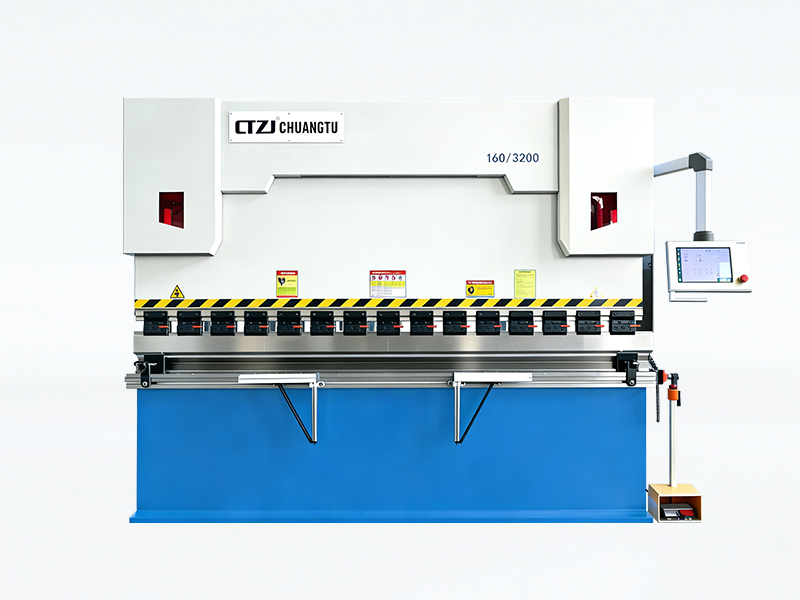
Low price: The total cost of the machine is only 60–70 per cent of that of electro-hydraulic synchronous models, making it the top choice for entry-level sheet metal workshops;
Low failure rate: Fewer hydraulic circuits, a simple valve assembly and a durable torsion-shaft mechanical synchronisation structure result in extremely low maintenance costs;
Low learning curve: Comes as standard with the user-friendly CT8 CNC system, which is easy to learn and operate, making it ideal for batch bending at a single angle;
Fast idle speed: Rapid ram descent and highly efficient return stroke, delivering excellent cycle times for simple 90° bends.
Small sheet metal workshops; batch bending of simple standard parts (distribution boxes, standard metal brackets, simple flanging of thin sheets); limited budget; products requiring a single bending angle.
Electro Hydraulic Servo Synchronous CNC Press Brake
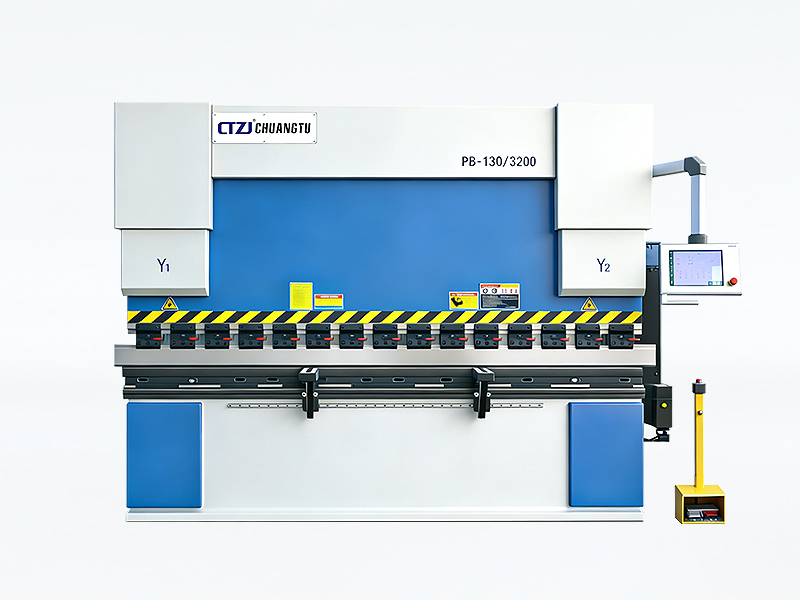
Exceptionally high synchronous bending accuracy: repeatability of ±0.01 mm, parallelism error across the entire sheet length ≤0.3 mm/m, and consistent angle control for long and thick sheets;
Multi-axis full-function expandability: comes as standard with 3+1/4+1 axes, expandable to 6+1/8+1 axes, supporting complex multi-step bending, rear stop height adjustment and multi-point deflection compensation;
High resistance to off-centre loading: Independent adjustment of left and right hydraulic cylinders ensures the ram remains level even under unilateral loading or when bending mixed-length sheets;
Wide tonnage range: Capable of handling 40T to 1600T, processing everything from thin stainless steel sheets to structural steel plates over 16mm thick;
Energy efficiency: The servo pump supplies oil on demand and ceases continuous operation under no-load conditions, saving 30% to 50% in electricity consumption.
Factories specialising in precision sheet metal work, enclosures and cabinets, medical devices, new energy equipment, thick-plate structural components for construction machinery, complex workpieces with multiple bends, high-volume orders comprising multiple product types, and those with stringent angular tolerance requirements.
Fully Electric (Servo Motor) Press Brake
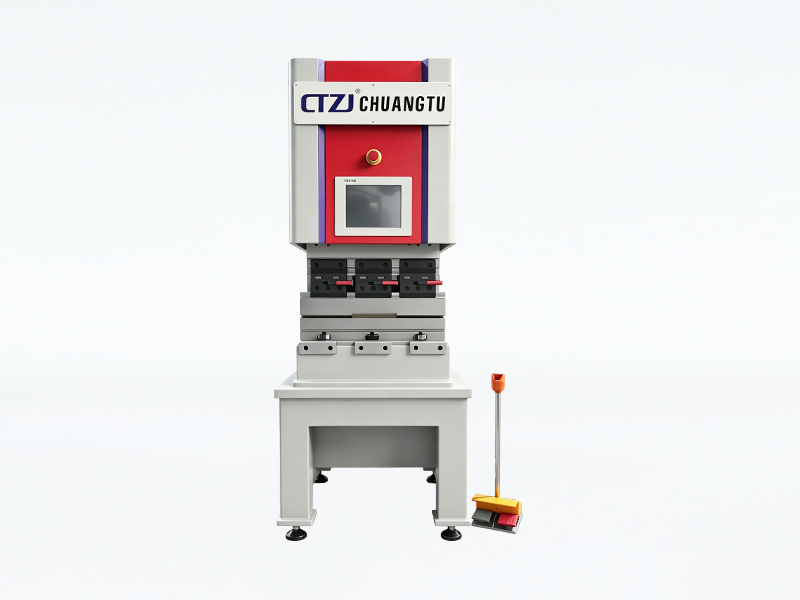
Environmentally friendly: no hydraulic oil or seal leaks;
Fast response: up to 40–50 bending cycles per minute, with efficiency improved by over 30 per cent compared to hydraulic models;
High repeatability: Bending angle error consistently maintained within ±0.5°, with no oil temperature drift during long-term continuous production;
Excellent energy efficiency: The motor only consumes power when the ram is in motion; standby power consumption is virtually zero, resulting in annual electricity savings of over 50% for machines of equivalent tonnage;
Low noise: No continuous humming from hydraulic pumps; the machine’s operating noise is significantly lower than that of hydraulic press brakes.
Precision sheet metal work on thin sheets (stainless steel, aluminium sheet, cold-rolled sheet ≤ 6 mm); cleanrooms; medical devices; electronic enclosures; high-end decorative components; high-frequency bending of small parts; and precision machining workshops with extremely stringent requirements regarding environmental protection, accuracy and cycle times.
| Type | Torsion-axis synchronous CNC press brake | Electro-hydraulic servo synchronous CNC press brake | Fully electric (servo motor) press brake |
| Principle of Operation | Mechanical torsion shaft; forced synchronisation of left and right cylinders | Dual servo valves for independent control of the left and right cylinders + closed-loop feedback via a linear encoder | Servo motor with direct-drive ball screw, no hydraulic oil |
| Accuracy | Moderate (approximately ±0.1 mm) | High (±0.02–0.05 mm) | High, with good repeatability |
| Speed | Moderate | Fast | Fast |
| Price | Economical | Relatively high | High |
| Applications | General sheet metal parts; routine bending in batches | High-precision sheet metal work, automotive components, lifts and other products with stringent requirements | Electronics, medical equipment, precision small parts, energy-efficient cleanrooms |
Factors to Consider When Selecting a CNC Press Brake
Bending Tonnage
Determined by the sheet thickness, material (tensile strength) and bending length; a safety margin of 1.2 to 1.5 times must be allowed.
Bending Length
This refers to the length of the worktable, which must exceed the maximum bending length of the workpiece.
Machining Accuracy
Repeatability and angular accuracy; precision components require a high-precision CNC system and angular measurement.
Sheet Material
Stainless steel and high-strength steel exhibit significant springback and require higher tonnage; for aluminium, the tonnage may be reduced appropriately.
Production Cycle Time
For large batches and fast cycle times, select a servo-driven model or one equipped with automated loading and unloading.
CNC System
Determines the ease of programming and the upper limit of functionality.
Die Configuration
A combination of general-purpose and specialised dies.
Safety Features
Do safety measures such as light curtain protection and laser protection meet the company’s safety requirements.
Budget
Imported or domestically manufactured equipment; after-sales service; spare parts supply lead times.
Infrastructure
Floor space; power supply capacity (voltage, power); load-bearing capacity of the foundation.
List of Optional Configurations for CNC Press Brake
Optional Safety Features
Laser safety device (laser light curtain)
Provides laser protection in the bending blade area; automatically pauses when an object approaches; replaces standard safety light curtains; suitable for small workpieces and frequent loading and unloading.
Rear safety guard
Protects the rear stop area of the machine tool to prevent unauthorised access.
Dual-pedal foot switch
A single pedal is standard; the dual-pedal design prevents accidental activation and features an emergency stop function.
Slider stroke safety lock
Locks the slider during maintenance and die changes to ensure safety during servicing.
Optional Workpiece Support
CNC front material support (servo-driven material support)
The servo motor tracks the movement of the slide, whilst the support plate moves up and down in synchronisation with the bending process, preventing sagging in long and thin sheets and significantly reducing the need for manual labour.
Pneumatic front material support
The support plate is raised and lowered by a pneumatic cylinder, offering better value for money than the servo-driven system.
Selection of CNC Systems
Advanced CNC Systems (Multi-axis Control)
3+1-axis, 4+1-axis, 6+1-axis and 8-axis CNC
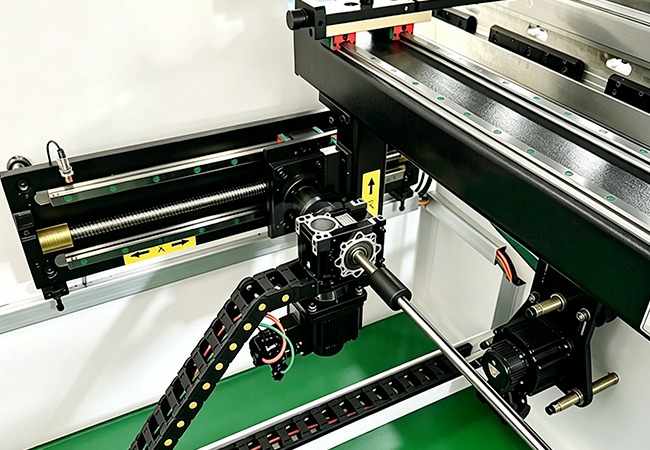
Controls Y1/Y2 (slider), X (rear stop forward/backward), R (rear stop up/down), Z1/Z2 (rear stop left/right), angle compensation axes, etc.
3D graphical programming system
Import DXF drawings, simulate bending operations graphically, and automatically generate bending programmes without the need for manual angle calculations.
Optional Deflection Compensation
Hydraulic deflection compensation
The worktable incorporates a built-in compensation cylinder to counteract deformation of the machine body caused by applied forces, ensuring consistent length and angle across the entire sheet; highly recommended for thin sheets and long workpieces.
Mechanical deflection compensation
Mechanical compensation using inclined wedges; simple to maintain.
Optional Rear Stop
R-axis (stopper lift)
The stopper moves up and down to accommodate workpieces of varying heights.
Rear stopper collision protection
The machine stops automatically upon contact with the workpiece to prevent damage to the stopper mechanism.
Mould Selection
Quick-change dies (pneumatic quick-change / hydraulic quick-change)
Enable rapid assembly and disassembly of upper dies, replacing manual bolt clamping and significantly reducing die changeover times.
Sectional dies (modular sectional dies)
Used for bending irregular shapes and notches, with multi-section assembly to avoid interference.
Reference Table for Selecting CNC Press Brake
| Sheet thickness (mm) | V-groove width (mm) | Theoretical bending force (tonnes) | Recommended tonnage |
| 1.5 | 12 | approx. 27 | 40–63 tonnes |
| 2 | 16 | approx. 49 | 63 tonnes |
| 2.5 | 20 | approx. 76 | 80~100 tonnes |
| 3 | 24 | approx. 73 | 100 tonnes |
| 4 | 32 | approx. 98 | 100~125 tonnes |
| 5 | 40 | approx. 153 | 160~200 tonnes |
| 6 | 48 | approx. 147 | 160~200 tonnes |
| 8 | 64 | approx. 196 | 220~250 tonnes |
| 10 | 80 | approx. 245 | 300 tonnes |
| 12 | 96 | approx. 293 | 320~400 tonnes |
Select CNC Press Brakes By Industry
Enclosures and Cabinets
General-purpose sheet metal is primarily made from 1–3 mm cold-rolled steel sheet, with high precision requirements and a wide variety of types
Electro-hydraulic servo presses with a capacity of up to 100 tonnes, equipped with angle measurement and compensation tables
Lifts / Household Appliances
High-volume, high-speed production; sheet metal thickness 0.8–3 mm
Small- to medium-tonnage servo press brakes, equipped with robotic loading and unloading systems and automated production lines
Automotive components
Contain a high proportion of high-strength steel and structural parts, requiring high tonnage capacity
160–400-tonne electro-hydraulic servo / all-electric press brakes, fitted with high-strength steel dies
Steel Structures / Construction
Thick plates, long sections (5–25 mm)
High-capacity models (400 tonnes and above), extended worktable, with hydraulic compensation
Shipbuilding / Heavy Industry
Extra-thick plates, oversized components
Large-scale specialised bending machines, customised to specific lengths
Hardware / Medical Devices
Small parts, precision components, thin sheets
Compact, fully electric / servo press brakes, with a focus on precision
Aerospace
Precision sheet metal, aluminium alloys, titanium alloys
Fully electric or high-precision servo press brakes, fitted with specialised dies and real-time angle measurement
Conclusion
When selecting a CNC press brake, there is no such thing as ‘the most expensive is the best’; rather, it is a matter of finding ‘the most suitable’. Calculate the tonnage based on ‘material – thickness – length’, determine the configuration based on ‘workpiece – precision – batch size’, and choose the brand based on ‘budget – after-sales service’. By following these steps, you will be able to select a CNC press brake that offers long-term reliability and excellent value for money.