What Is the Difference Between an All-electric Press Brake and a Hydraulic Press Brake?
Blog 2026-10-09 72
Table of Contents
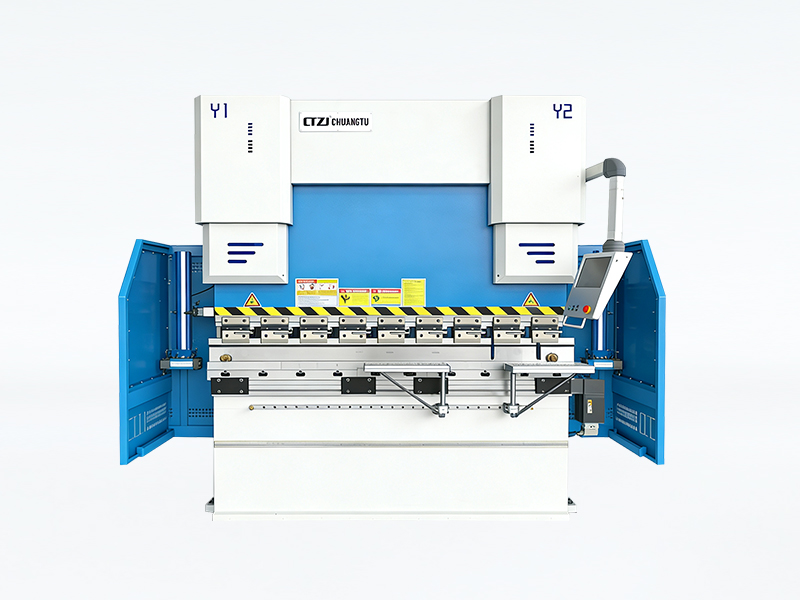
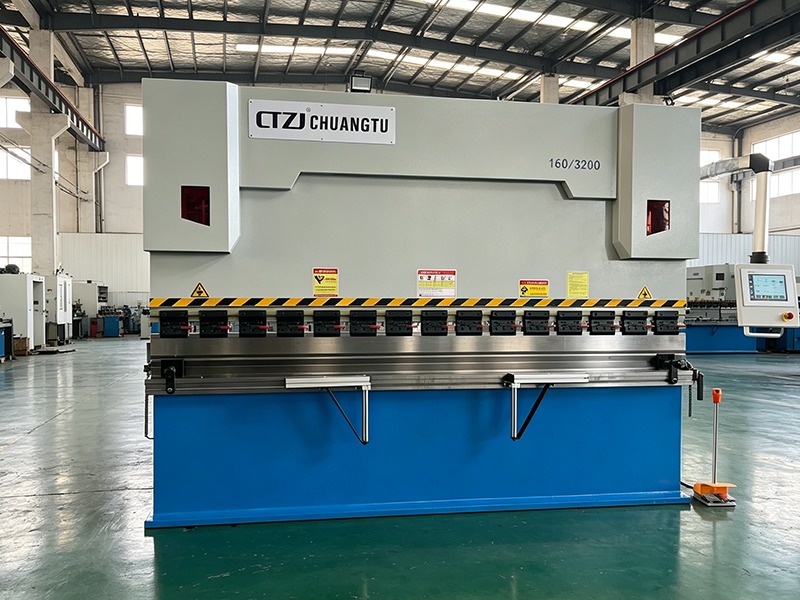
ToggleIn sheet metal bending, hydraulic press brakes have long been the traditional workhorse, whilst all-electric servo press brakes are a new, energy-efficient and high-precision model that has emerged in recent years in the field of CNC sheet metal working.
As they rely on entirely different drive mechanisms, there are significant differences between the two in terms of processing speed, bending accuracy, operating costs and suitability for different sheet metal conditions.
How It Works
How a Hydraulic Press Brake Works
The motor drives the hydraulic pump to generate high-pressure hydraulic fluid;
The CNC system sends a signal to the servo proportional valve to control the direction and flow rate of the hydraulic fluid;
High-pressure oil enters the left and right cylinders, pushing the ram downwards to generate bending pressure;
The return stroke is accomplished by hydraulic return flow or a nitrogen-balanced cylinder;
Synchronisation is achieved via a torsion bar (standard model) or closed-loop synchronisation using dual electro-hydraulic servo valves (high-end electro-hydraulic synchronisation);
The pressure level is regulated by the hydraulic system’s oil pressure.
How An all-electric Bending Machine Works
All hydraulic components of the press brake (oil pump, hydraulic cylinders, oil tank, hoses, and hydraulic valves) have been removed;
One set of high-power servo motors on each side, paired with precision ball screws / planetary gear racks to directly drive the slide;
The CNC system directly controls the servo motors’ speed, torque and position, ensuring fully electrical closed-loop synchronisation;
Bending pressure is calculated from the torque output of the servo motors, with pressure, speed and position adjustable to the millisecond;
Slider balancing relies on the reverse torque of the servo motors to counteract its own weight, eliminating the need for nitrogen cylinders or hydraulic balancing.
Respective Strengths
Advantages of Hydraulic Press Brakes
High load-bearing capacity: Easily handles ultra-heavy loads of 100T–2000T; the only choice for bending thick steel plates, stainless steel and high-strength sheet metal;
Stable load handling and impact resistance: Excellent hydraulic cushioning when bending thick plates, at large angles or under repeated heavy loads, minimising damage to transmission components;
Low cost per long stroke: Modifying the ram for a longer stroke and extending the worktable offers better value for money;
High environmental adaptability: Runs reliably in high-temperature, dusty workshops provided the oil filter is maintained properly.
Advantages of All-electric Bending Machines
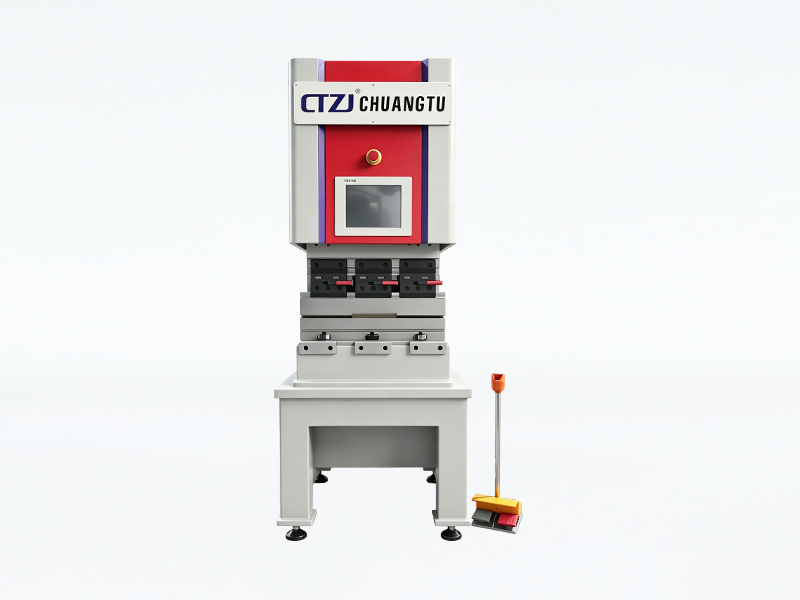
High speed: The downstroke and return speeds are 2–3 times those of a hydraulic press, increasing bending efficiency for small-batch parts by 40%–80%;
Energy-efficient and power-saving: the motor operates only when the ram is in motion; standby power consumption is virtually zero, resulting in annual electricity savings of 30%–60%;
Clean production with no oil contamination: no hydraulic oil is used, making it suitable for clean workpieces such as stainless steel, aluminium sheets, home appliance trim, food processing equipment and medical devices;
High precision and repeatability: servo position closed-loop control ensures repeatable positioning to within ±0.01 mm; unaffected by oil temperature, with stable precision throughout the day;
Low noise: No oil pump; operating noise ≤65 decibels, creating a better workshop environment;
Rapid response: Bending pressure and speed can be adjusted in real time; the all-electric press brake allows for more precise fine-tuning of minute angles, making it suitable for complex, multi-step sheet metal processing.
Comparison of Technical Specifications
| Specifications | Hydraulic press brake | All-electric servo press brake |
| Power medium | High-pressure hydraulic oil | Servo motor + lead screw / rack and pinion |
| Standard tonnage | 63T–2000T | 16T–300T |
| Slider idle speed | 80–120mm/s | 200–400mm/s |
| Return speed | 60–100mm/s | 180–300mm/s |
| Repeatability | ±0.03~±0.05mm | ±0.01mm |
| Bending accuracy | Subject to deviation due to oil temperature | Not affected by temperature |
| Standby power consumption | The oil pump operates continuously, resulting in high energy consumption | When idle, the motor enters sleep mode, resulting in virtually zero power consumption |
| Operating noise | 78–85 dB | 60–65 dB |
| Risk of oil contamination | Risk of leakage and material contamination | Completely free from oil contamination |
| Synchronisation Methods | Synchronisation via hydraulic proportional valves | Electrical closed-loop synchronisation using dual servo motors |
| Sheet thickness for bending | Can process carbon steel 20 mm and above | Suitable for thin and medium-thin sheets of 0.5–12 mm |
Price Comparison
Below is a price reference table for 2026; for models with the same specifications, the all-electric versions are more expensive.
| Models | Hydraulic press brake price | All-electric servo press brake price |
| 35T/1250 | 16500~21000 | 28400~ 35800 |
| 63T/2500 | 28400~34300 | 41800~ 52200 |
| 100T/3200 | 35800~44800 | 47800~ 59700 |
| 160T/3200 | 49000~58200 | 71600~86600 |
Selecting a Use Case
Scenarios for Sselecting A Hydraulic Press Brake
Processing thick steel plates, high-strength iron plates and thick stainless steel requires high-tonnage bending presses of 100 tonnes or more;
Construction machinery, steel structures, heavy-duty sheet metal for enclosures and cabinets, and pressure vessel components;
Single-order, high-volume rough bending of thick plates, where there are no extremely high demands on processing speed;
Manufacturing facilities with limited budgets, a basic workshop environment, but ample maintenance resources;
Applications requiring extra-long worktables (4 metres, 6 metres, 8 metres) with large opening widths and long stroke bending operations.
Scenarios for Selecting A Fully Electric Servo Press Brake
recision sheet metal fabrication: stainless steel cladding, aluminium panels, household appliance casings, medical devices, food processing equipment;
Small-batch production of small parts involving frequent bending across multiple processes, with a focus on high throughput and short cycle times;
Products must be free from oil contamination and have a high degree of surface cleanliness; parts requiring spray painting or brushed finishes;
High environmental standards in the workshop and strict noise control;
Long-term mass production with stable order volumes; aiming to reduce electricity costs and annual maintenance costs;
High-precision small parts requiring complex multi-angle bending, with extremely high demands for dimensional consistency.
Conclusion
Hydraulic press brakes are versatile, heavy-duty machines. Their advantages include high tonnage capacity, the ability to handle thick sheet metal, and low purchase costs; their disadvantages are high energy consumption, oil contamination and slow speed. They are suitable for steel structure firms and heavy-duty sheet metal workshops specialising in thick plate;
All-electric press brakes are precision, high-speed, lightweight machines. Their advantages include high efficiency, energy savings, a clean operating environment and high precision; their drawbacks are limited tonnage capacity and high purchase costs. They are suitable for the precision sheet metal processing of thin sheets, stainless steel and batch production;
FAQ
How Much Can An All-electric Bending Machine Save on Electricity Bills in A Year?
Compared with hydraulic presses of the same tonnage, annual electricity savings range from 40 per cent to 60 per cent; the higher the output of small-batch parts, the greater the savings.
Is An All-electric Bending Machine Difficult to Operate?
After just 1–2 days of basic training, new recruits can carry out mass production independently, making the role suitable for new staff on rotational assignments within the factory.
Can Bending Dies for Thin and Thick Sheets Be Used Interchangeably?
This is not recommended. For thin sheets, use a small V-groove die to ensure precise bending angles; for thick sheets, use a large V-groove, otherwise the sheet may crack under pressure, the die may break, or cracks may appear in the workpiece.
How Should One Choose A CNC System?
The E21 is suitable for simple, single-angle bending; the DA53T and DA66T support multi-stage automatic bending, deflection compensation and automatic angle correction, making them suitable for sheet metal workshops producing complex parts in batches.