A Cost-Effective Choice for Rolling Small-Diameter Thin Sheets into Circles—3-Roll Asymmetric Plate Rolling Machine

Blog 2026-10-18 55
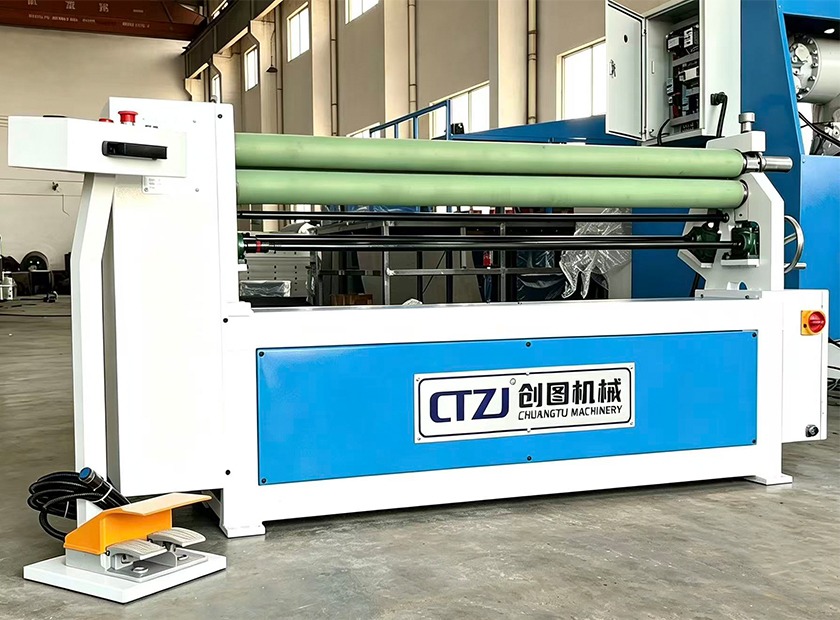
In the sheet metal fabrication, ventilation ductwork, small-diameter cylinder, environmental protection equipment, and filter cartridge manufacturing industries, there is a significant demand for rolling thin-gauge, small-diameter cylinders.

Thanks to its built-in end pre-bending capability, ability to roll cylinders with smaller diameters, simple structure, and affordable price, the 3-roll asymmetric plate rolling machine has become the go-to, cost-effective solution for rolling thin-gauge, small-diameter cylinders.

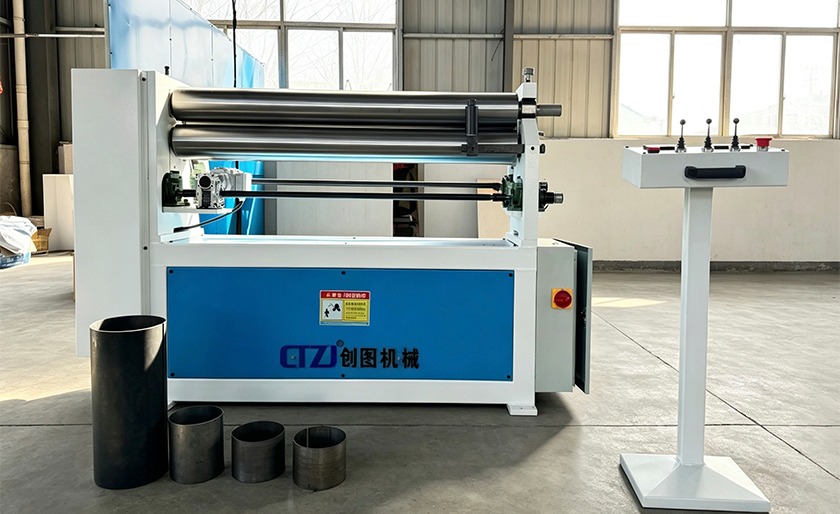
3-Roll Asymmetric Plate Rolling Machine

Principle of Operation

The 3-roll asymmetric plate rolling machine employs an asymmetric triangular roll layout: the upper roll serves as the active working roll, one lower roll moves vertically to clamp the sheet metal, and the third side roll performs an inclined lifting motion—this is the most fundamental difference from a standard symmetric three-roll machine.

The sheet is fed between the upper and lower rolls, and the lower roll moves vertically upward to clamp the sheet;

The side roll is raised at an angle to pre-bend one end of the sheet directly, eliminating most of the straight edge;

A motor drives the rotation of the upper and lower rollers; friction between the rollers and the sheet drives continuous feeding. Through multiple passes and gradual adjustments to the side rollers’ positions, the sheet undergoes continuous plastic bending;

After pre-bending one side is complete, the sheet is flipped to perform pre-bending on the other end; rolling continues, gradually bending the sheet into a cylinder;

Once forming is complete, the frame is tilted, the upper roller is withdrawn, and the finished cylinder is removed.

Core Principle: By utilizing the diagonal movement of the side rollers to achieve end pre-bending, there is no need for additional pre-processing with a bending machine. Both the pre-bending and rolling processes are completed directly on the same machine, significantly shortening the production process.

Technical Specifications

ModelMaximum sheet thicknessEffective length of work rollersMinimum rolling diameterMain motor powerRoller material
W11F-2×10002mm1000mm≥ plate thickness × 122.2kWQuenching of 45# steel
W11F-2×15002mm1500mm≥ plate thickness × 123kWQuenching of 45# steel
W11F-4×10004mm1000mm≥ plate thickness × 123kwQuenching of 45# steel
W11F-4×15004mm1500mm≥ plate thickness × 124kwQuenching of 45# steel
W11F-6×15006mm1500mm≥ plate thickness × 125.5kwQuenching of 45# steel

When machining stainless steel and aluminium sheets, the actual machinable sheet thickness is approximately 0.5 to 0.7 times that of carbon steel;

The minimum rolling diameter is determined by the sheet material, yield strength and roller diameter;

Optional extras include a conical rolling device, foot-operated control and an upgrade to wear-resistant roller coating.

Components of a 3-roll asymmetric plate rolling machine

Welding Frame

Made from a single piece of steel plate, fully welded and stress-relieved through ageing treatment to ensure it remains distortion-free during long-term operation;

Supports three work rollers and the drive mechanism.

Three Working Rolls

Upper roll (drive roll, with tilting unloading function), lower roll (vertically adjustable clamping roll),

Side roll (diagonally adjustable pre-bending roll);

The roll shafts are quenched and tempered and surface-hardened for wear resistance.

Drive System

Motor, gearbox and gear pair, which drive the upper and lower rollers to rotate, thereby feeding the sheet metal.

Lifting Mechanism

Manual or electric adjustment via lead screw / worm gear, controlling the clamping of the lower roller and the tilting feed of the side rollers.

Electrical System

Stand-alone control console, foot switch, forward/reverse and emergency stop buttons, safety protection.

Unloading Mechanism

One end of the upper roller can be quickly tilted to facilitate the removal of the finished cylinders.

Safety Features

Safety guards, emergency stop, limit switches.

Advantages and Features

3-Roll Asymmetric Plate Rolling Machine

Integrated End Pre-bending

The side-roller oblique-push mechanism allows both ends of the sheet to be pre-bent directly, eliminating the need for a separate pre-bending operation on a press brake.

The straight edges of the finished product are significantly shorter than those produced by standard symmetrical three-roller plate rollers, making it ideal for processing small-diameter cylinders.

Rolling of Small-diameter Cylinders

The asymmetrical roller geometry enables a smaller rolling radius when working with thin sheet metal, making it the preferred choice for small-diameter filter cartridges, air ducts and small metal cylinders.

Excellent Value for Money

Compared to 4 roller plate rolling machines, the purchase cost is significantly lower; the mechanical model is simple to maintain, with inexpensive spare parts and straightforward repairs.

Compact Design

The 3-roll asymmetric plate rolling machine is compact in size and can be accommodated in small to medium-sized sheet metal workshops and small processing plants, without the need for a large foundation.

Simple Operation

The mechanical model features straightforward electrical control logic, with foot-operated control for forward and reverse rotation; operators can be trained to use it within a short period.

It supports a variety of thin sheets, including carbon steel, stainless steel, aluminium and galvanised sheet.

Conical Rolling

With the optional conical rolling attachment, the machine can produce conical tubes, offering multi-purpose functionality and expanding the range of products that can be processed.

Points to Consider When Selecting a 3-roll Asymmetric Plate Rolling Machine

Selecting the Model Based on Material and Sheet Thickness

The parameters on the nameplate are set by default for Q235 carbon steel; for stainless steel and high-hardness sheets, the selected sheet thickness must be reduced by one grade to prevent the machine from stalling and to avoid roller deformation.

Confirm the Maximum Sheet Width

The effective roller length of the equipment must be ≥ the sheet width, with a 20–50 mm allowance; do not operate at full capacity.

Minimum Cylinder Diameter Requirement

Verify the target cylinder diameter; if the cylinder diameter is extremely small, increase the roller surface hardening grade or select a model with a smaller roller diameter.

Selection of Drive Method

For small batches and limited budgets, opt for the manual lead screw model; for continuous mass production and frequent adjustment of the side rollers, prioritise the electric lifting model.

Workpiece Type

 If producing large quantities of conical cylinders, select the conical coiling device when placing your order; this can be omitted for purely cylindrical workpieces to save costs.

Safety and Maintenance

Allow sufficient operating space for the equipment and verify the workshop’s load-bearing capacity;

Prioritise models with roll shafts that have undergone tempering and quenching to extend service life.

Conclusion

If your core product consists of thin-gauge, small-diameter cylinders, the main drawback of traditional symmetrical three-roll plate rolling machines is that the straight edges at both ends of the sheet are too long, requiring additional equipment for pre-bending, and the minimum rolling diameter tends to be too large; cnc 4-roll plate rolling machines offer high precision, but they are expensive, take up a lot of space and place significant strain on the budget.  3-roll asymmetrical  plate rolling machines are a more practical and economical choice.

FAQ

Does a 3-roll Asymmetric Plate Rolling Machine Require a Foundation?

The standard model is lightweight and can be placed directly on a level concrete floor; no special foundation is required.

What Should Be Kept in Mind During Routine Equipment Maintenance?

Apply lubricating grease to the gears, lead screws, and bearings on a regular basis;

Keep the roller surfaces clean to prevent welding slag and metal shavings from scratching the roller shafts;

Check that the limit switches and emergency stop buttons are functioning properly.

Why Are There Straight Edges Left on the Sheet Metal After it Has Been rolled Into a Circle?

Insufficient lifting force from the side rollers during pre-bending;

The yield strength of the sheet metal is too high;

The downward pressure per feed is too great.

What Types of Sheet Metal Can Be Rolled Into a Circle?

The 3-roll asymmetric plate rolling machine is suitable for Q235 carbon steel, galvanized sheet, aluminum sheet, and thin stainless steel sheet.

What is the Smallest Diameter of a Aylinder that Can Be Rolled?

The minimum rolling diameter is approximately the sheet thickness multiplied by 12. The actual tube diameter will be affected by the roller diameter, sheet material, and springback.

Get Free Quote